
How to Sell Jewellery and Watches Online
Jewellery and watches carry more value in less space than almost anything else you might sell, which brings two complications: buyers are cautious about authenticity, and both parties need to think carefully about how the transaction happens. Handle those well and it is a straightforward category.
What this covers
Key takeaways
- Hallmarks tell you the metal. Find and photograph them before pricing anything.
- Scrap gold value is the floor — craftsmanship and brand sit above it.
- Never claim authenticity you cannot support. “Unverified” is a legitimate answer.
- Box, papers and service history materially affect watch values.
- Meet somewhere secure — a bank or jeweller, not a car park.
What actually determines value
| Factor | Effect |
|---|---|
| Metal type and weight | Sets the floor value regardless of anything else |
| Stones | Size, quality and whether certificated |
| Brand | Can multiply value several times over the materials |
| Age and period | Antique and period pieces have their own market |
| Condition | Damage and wear reduce value; poor repairs more so |
| Documentation | Certificates, receipts and boxes add real money |
| Current fashion | Styles move in and out of demand |
Identifying metals and stones
Most jewellery carries marks that identify the metal, and finding them is the first step in pricing anything.
- Look for hallmarks — inside rings, on clasps, on the back of pendants
- Common gold marks — 375, 585, 750, 916 indicating fineness
- Silver marks — 925 for sterling
- Platinum marks — 950 or PT
- Maker marks alongside the fineness mark
- Weigh it on accurate scales and state the grams
- Note unmarked items as unmarked rather than guessing
Marks such as GP, RGP or HGE indicate plating rather than solid metal, and the value difference is enormous. If you are unsure whether something is solid or plated, say so plainly rather than describing it as gold.
Watches specifically
Watch buyers are among the most informed in any category and ask precise questions.
| State | Why |
|---|---|
| Brand, model and reference number | Reference determines value within a model line |
| Serial number | Dates the watch and confirms the model |
| Movement type | Automatic, manual or quartz |
| Case size | In millimetres, excluding the crown |
| Bracelet or strap | Original or replaced, and length or links included |
| Service history | When last serviced; overdue service is a real cost |
| Timekeeping | How many seconds per day it gains or loses |
| Box and papers | A full set commands a significant premium |
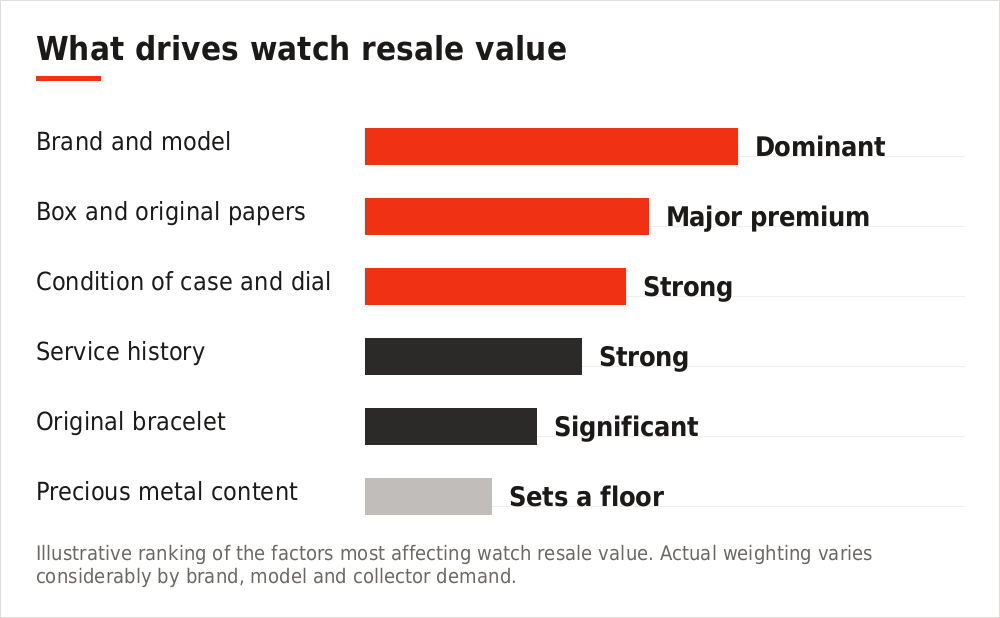
Illustrative ranking of the factors most affecting watch resale value. Actual weighting varies considerably by brand, model and collector demand.
List jewellery and watches free
No commission — on a high-value item that is a substantial saving.
Authenticity, honestly handled
Describing an item as a genuine branded piece when you cannot verify it exposes you to a legitimate claim, and knowingly selling counterfeits is unlawful in most countries. If you inherited it or bought it second-hand, say exactly that.
Acceptable and honest phrasings:
- “Bought new from an authorised dealer in 2018, receipt included”
- “Inherited; I have no documentation and cannot verify authenticity”
- “Marked 750 with a maker’s mark I have not identified”
- “Sold as unverified — happy for you to have it inspected before purchase”
Offering to let a buyer have the item examined by a jeweller before completing is the strongest trust signal available in this category, and genuine sellers lose nothing by it.
Getting it valued
Establish the scrap floor
Weight multiplied by fineness against the current metal price. This is the minimum, whatever else happens.
Research comparable sold pieces
Same brand, model, metal and stone specification.
Get a professional opinion on anything significant
A jeweller or auction house will often give an indication free. Worth doing before listing something potentially valuable.
Consider certification for larger stones
An independent certificate can add more than it costs on a significant diamond.
Price above scrap where justified
Craftsmanship, brand and period all sit above the metal value — but you must evidence them.
Photographing small items
- Plain neutral background — grey or white cloth works well
- Indirect daylight; avoid flash, which blows out metal and stones
- Macro or close focus on the hallmark, readable
- The whole piece from several angles
- Clasps, settings and any engraving
- Watch dial straight on, plus the caseback and movement if visible
- Every scratch, dent or worn area
- Box, papers and certificates laid out
- A scale reference — on a hand, or beside a coin
Writing the listing
Title: Brand or metal + Item + Key specification.
9ct gold curb chain, 24 inch, 18.4g, fully hallmarked
The description should state metal and hallmarks, weight, dimensions, stone details, brand and model where applicable, condition with every mark noted, what documentation exists, and clearly whether authenticity is verified or not.
Handling the transaction safely
Small, valuable and easily resold means this category needs more care than most.
Meet somewhere secure
Inside a bank, or at a jeweller. Not a car park, and not your home.
Let them examine it properly
A genuine buyer will want to inspect closely. Stay present throughout.
Take cleared payment
Cash counted and verified, or a transfer visible in your own account.
Photograph it before handover
Including any distinguishing marks, in case of later dispute.
Give a detailed receipt
Describing the item precisely, with both parties’ details.
Post only with full insurance
Tracked, signed for, insured to full value, and photograph the packing.
Frequently asked questions
How do I know if it is real gold?
Look for a fineness hallmark such as 375, 585 or 750. Marks like GP or RGP indicate plating. If unmarked, a jeweller can test it inexpensively.
Is scrap value all I will get?
It is the floor. Branded, antique and well-made pieces sell for considerably more — provided you can evidence what they are.
Do I need a certificate for a diamond?
For anything significant, it usually adds more than it costs and makes the sale much easier.
Should I clean it before selling?
Gentle cleaning yes. Avoid polishing antique pieces or watch cases — over-polishing removes material and reduces value.
What if I cannot verify the brand?
Say so plainly and offer to let the buyer have it inspected. Honest uncertainty sells; unsupported claims create disputes.
Is it safe to post a valuable item?
With full insurance, tracking and signature, yes — but only after payment has genuinely cleared.
The short version
Find and photograph the hallmarks. Weigh it. Establish the scrap floor, then research what comparable pieces actually sold for. Never claim authenticity you cannot support, offer inspection instead, and meet somewhere secure with cleared payment.
Sell without losing a percentage
Free to list, free to sell — on a valuable item, commission-free matters.
Have a look at what is currently listed to judge the going rate.