How to Sell Clothing Online: Measurements to Bundles
Clothing is the highest-volume category in second-hand selling and the one where most listings fail. The reason is nearly always the same: buyers cannot try it on, so everything depends on measurements, honest condition and photographs that show the actual garment rather than a crumpled heap.
What this covers
Key takeaways
- Measurements beat sizes. A size 12 varies enormously between brands and decades.
- Photograph the garment flat or hanging — never crumpled on a bed.
- Brand matters more in clothing than almost any other category.
- Bundle low-value items; list valuable pieces individually.
- Never guess at authenticity. Describe what you know and no more.
What sells and what does not
| Type | Demand | Notes |
|---|---|---|
| Recognised brands, good condition | Strong | The core of the market |
| Outerwear and coats | Strong | High value, strongly seasonal |
| Occasion and formal wear | Strong | Worn once, sells well |
| Vintage and genuine retro | Strong | Dedicated buyer base; research before pricing |
| Children’s clothing bundles | Moderate | Bundle by size and season |
| Trainers and quality footwear | Moderate | Condition of soles is decisive |
| Fast fashion, worn | Weak | Bundle it; individual listings rarely sell |
| Underwear and swimwear | Weak | Unworn with tags only |
Measuring garments properly
This is the single most important thing you can do. Sizing is inconsistent across brands, countries and decades, and buyers who cannot try it on rely entirely on your numbers.
Lay the garment flat and measure across, then state it as a flat measurement.
| Garment | Measure |
|---|---|
| Tops and shirts | Pit to pit, shoulder to hem, sleeve from shoulder seam |
| Trousers and jeans | Waist flat, inside leg, rise, leg opening |
| Dresses | Pit to pit, waist flat, total length |
| Coats and jackets | Pit to pit, shoulder width, sleeve, total length |
| Skirts | Waist flat, hip flat, length |
| Footwear | Marked size plus insole length in cm |
Shoe sizing varies wildly between brands and countries. The internal length in centimetres is objective, and it is what experienced second-hand footwear buyers actually ask for.
Grading condition honestly
- New with tags — unworn, tags attached
- New without tags — unworn but tags removed
- Excellent — worn a few times, no visible wear
- Good — regular wear, no damage, may have slight fading
- Fair — visible wear, minor marks or pilling, still wearable
- For repair or fabric — damaged, sold as such
Then list specifics: bobbling, a small mark and where, a replaced button, a shortened hem, fading at the cuffs. Anything a buyer would notice within a minute of receiving it.
Both cling to fabric and both are deal-breakers for many buyers. “From a smoke-free, pet-free home” is a genuine selling point when true — and concealing the opposite guarantees a complaint.
Pricing clothing
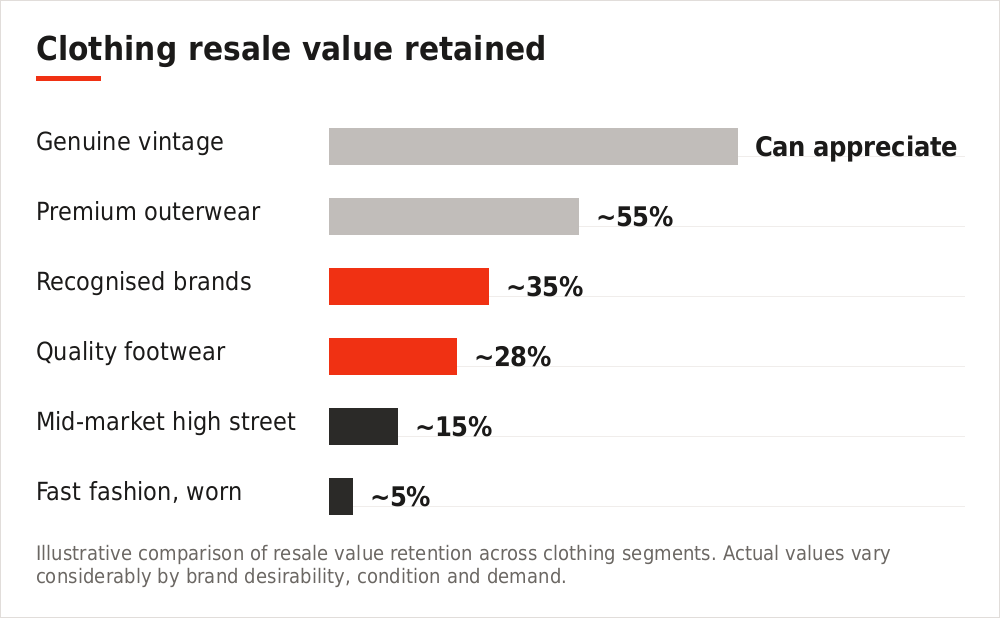
Illustrative comparison of resale value retention across clothing segments. Actual values vary considerably by brand desirability, condition and current demand.
Brand is the dominant factor. A premium coat in good condition can hold a substantial share of its original price for years, while an unbranded equivalent may struggle to sell at all.
Research sold listings for the same brand, item and size. Be realistic: most everyday clothing sells for a small fraction of retail, and pricing on what you paid is the fastest way to a listing that never moves.
List your clothing free
No listing fee, no commission, and no cap on how many items you post.
Photographing clothes
Hang it or lay it flat
Against a plain door, wall or floor. Never crumpled on a bed — it is the single most common mistake in this category.
Use daylight
Artificial light distorts colour badly, and colour accuracy matters more here than almost anywhere.
Front and back
Both, straight on, garment straightened out.
Photograph both labels
The brand label and the care and composition label. Buyers check fabric content.
Show the fabric close up
Texture, weave, any pilling. It communicates quality that a full shot cannot.
Photograph every flaw
One clear close-up per mark, referenced in the description.
Include a measurement shot if helpful
A tape measure across the chest reassures buyers that your numbers are real.
Writing the listing
Title: Brand + Item + Size + Colour + Key detail.
Barbour Bedale waxed jacket, size 14, olive, recently rewaxed
The description should state brand, item type, marked size, all flat measurements, fabric composition, colour, condition grade with every flaw located, whether it is smoke-free and pet-free, and whether you post or it is collection only.
Bundles and job lots
For everyday clothing, bundling is usually the difference between selling and not.
- Bundle by size — a buyer wants items that all fit
- Bundle by season — summer with summer, winter with winter
- Bundle by age for children’s clothing — “12–18 months, 15 items”
- State the item count and list what is included
- Photograph everything laid out together, plus a few individually
- Price per item honestly — bundles work because they are cheap per piece
Children outgrow clothing before wearing it out, so bundles are genuinely good value and parents buy them repeatedly. Group by age band and season, count the items, and photograph the lot together.
Designer items and authenticity
Higher-value branded items attract careful buyers and, occasionally, disputes. Be precise about what you actually know.
- Say where and when you bought it, if you know
- Include the receipt where you still have it
- Photograph authenticity markers — serial tags, stitching, hardware, dust bag, box
- Never claim authenticity you cannot support. If you are unsure, say you are unsure
- Do not list known counterfeits. It is unlawful in most countries and against our rules
“Bought second-hand, I cannot verify authenticity” is honest and lets the buyer decide. Claiming genuine when you do not know exposes you to a legitimate complaint.
Frequently asked questions
Should I wash items before selling?
Yes. Clean, pressed garments photograph better and sell for more. Say they have been freshly laundered.
Is it worth selling cheap high-street clothing?
Individually, rarely. In bundles grouped by size and season, yes.
How do I price vintage clothing?
Research the specific era, label and condition. Genuine vintage can be worth considerably more than owners assume — do not price it as ordinary second-hand.
Should I offer postage?
Clothing is light and cheap to post, so offering it widens your buyer pool substantially. State the cost clearly and separately.
What about items that no longer fit but are unworn?
These are your best sellers. Say “new without tags” and explain why — buyers respond well to a clear reason.
Can I sell shoes that have been worn?
Yes, provided you photograph the soles and insoles honestly. Sole wear is the first thing footwear buyers check.
The short version
Measure it flat and give the numbers. Hang it against a plain wall in daylight and photograph front, back, labels and flaws. Grade the condition honestly and say where every mark is. Bundle the cheap things and list the valuable ones individually.
Clear the wardrobe, keep the money
Free to list, free to sell, unlimited items and no commission.
Or browse by category and location to check the local market first.